While much of the world turns on a tap without a second thought, families in the town of Saida, Daraa, have lived with a starkly different reality. For years, water has reached many households only once every 15 to 20 days.
In a place already strained by prolonged crisis and unreliable infrastructure, access to water became an ongoing struggle.
With taps running dry for weeks at a time, families were forced to adapt in difficult ways. Many paid high prices for trucked water or carried heavy jerrycans from outside the town.
Household costs rose sharply, hygiene standards declined, and families were often forced to ration water meant for drinking, cooking, and washing. For the most vulnerable, this scarcity deepened existing hardships.
Powering water when the grid fails
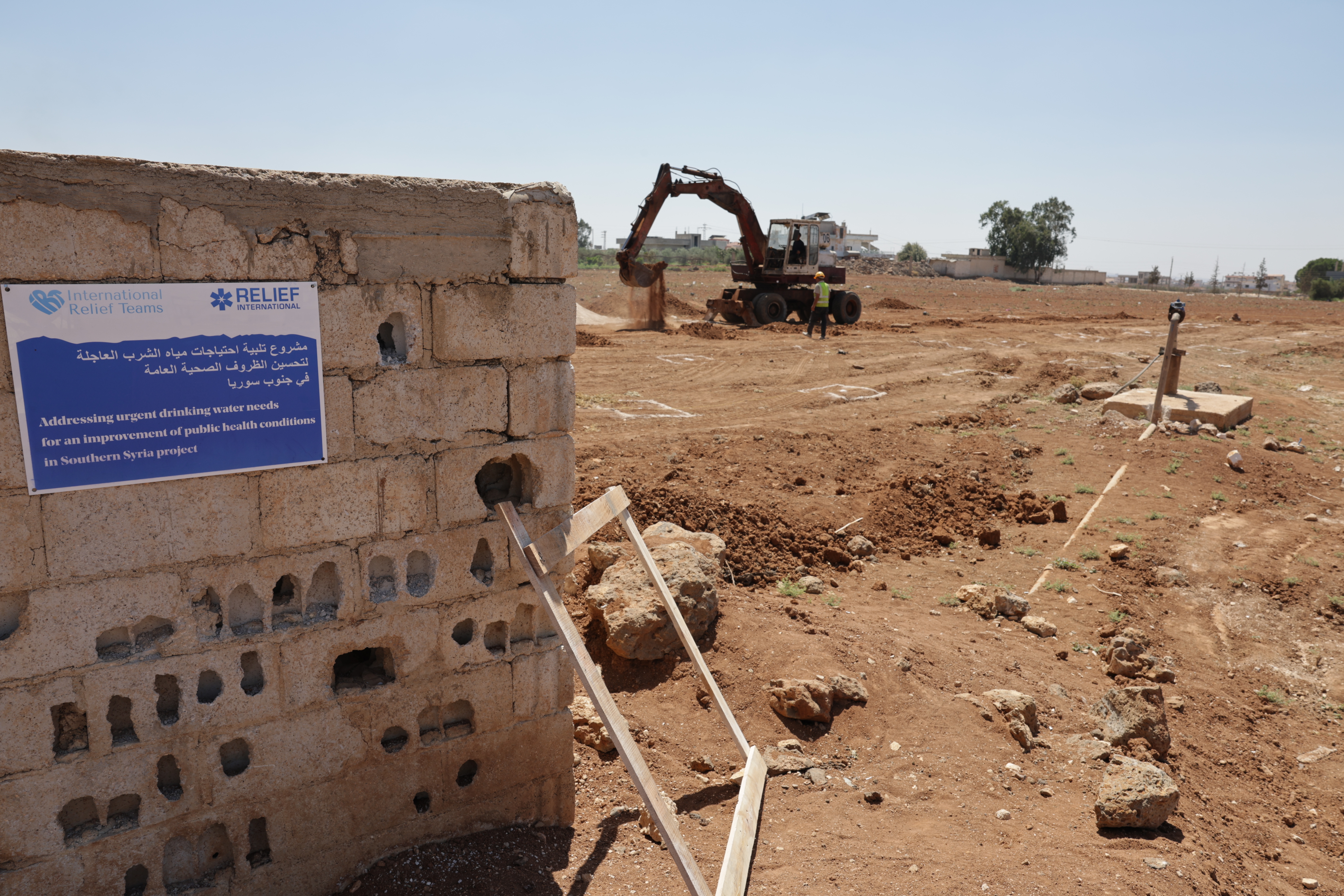
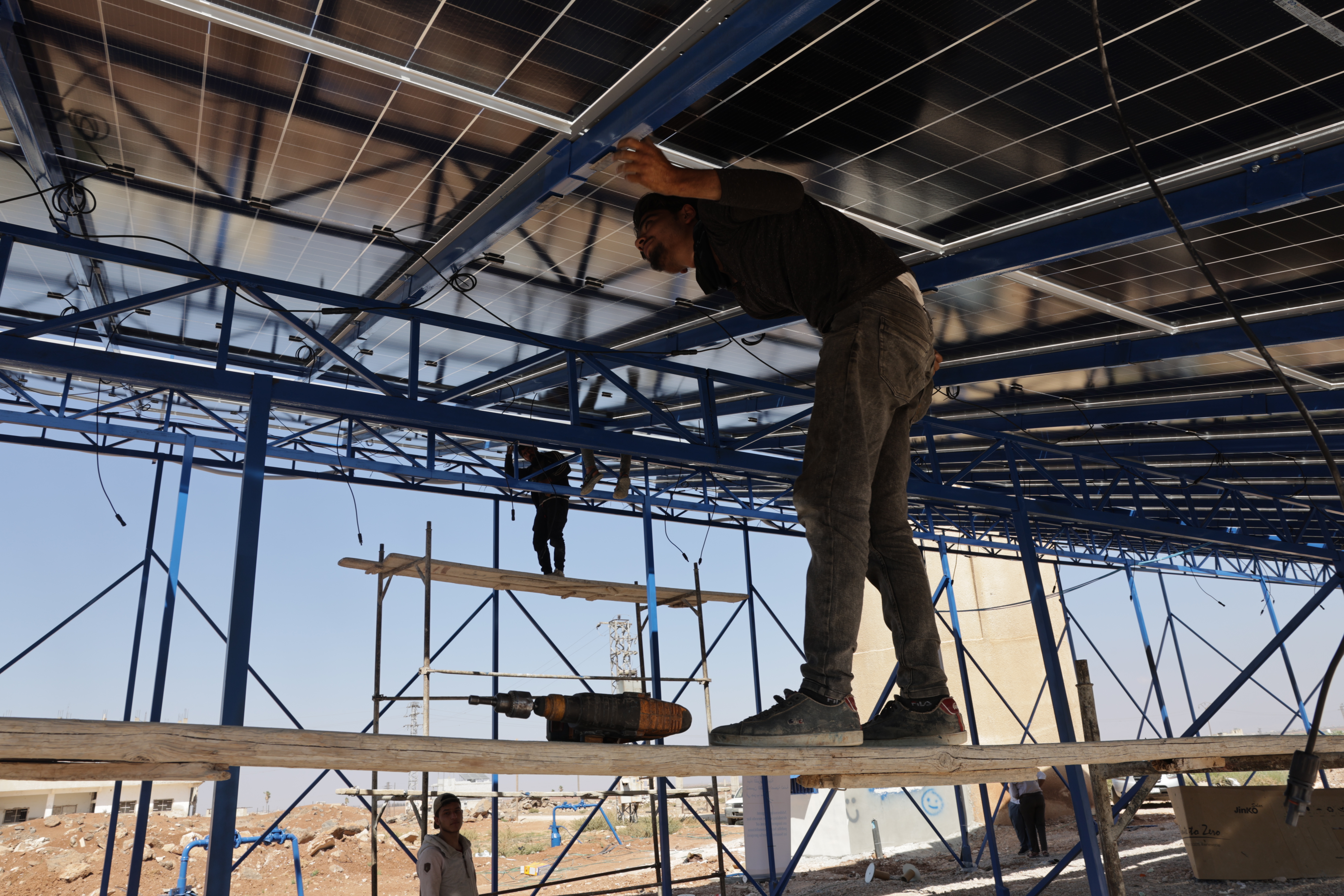
On-site installation of solar power systems facilitated by Relief International, improving the reliability of the local water supply.
This is where Relief International stepped in with a practical, sustainable solution. To stabilize Saida’s water supply, Relief International, with support from International Relief Teams, installed solar power systems on three municipal wells.
The system draws power from the public grid when it is available; when power cuts occur which is a chronic problem then solar energy automatically takes over.
“We have a duty to ensure clean, reliable water for people,” said Ahmad, Senior WASH Officer at Relief International. “Given the interruptions in electricity in the south, we built a clean-energy system that keeps water moving.”
Reliable water, safely delivered
Since the system became operational, residents have reported a significant improvement, with water being available every seven to eight days for most neighborhoods.
The three wells now meet around 70 percent of Saida’s water needs, serving an estimated 7,000 people and the local health center. Continuous chlorination was also introduced, ensuring that improved reliability goes hand in hand with safer water.
“We matched the energy solution with disinfection,” Ahmad added. “Reliability without water quality isn’t a solution.”
Reducing costs and strengthening local capacity
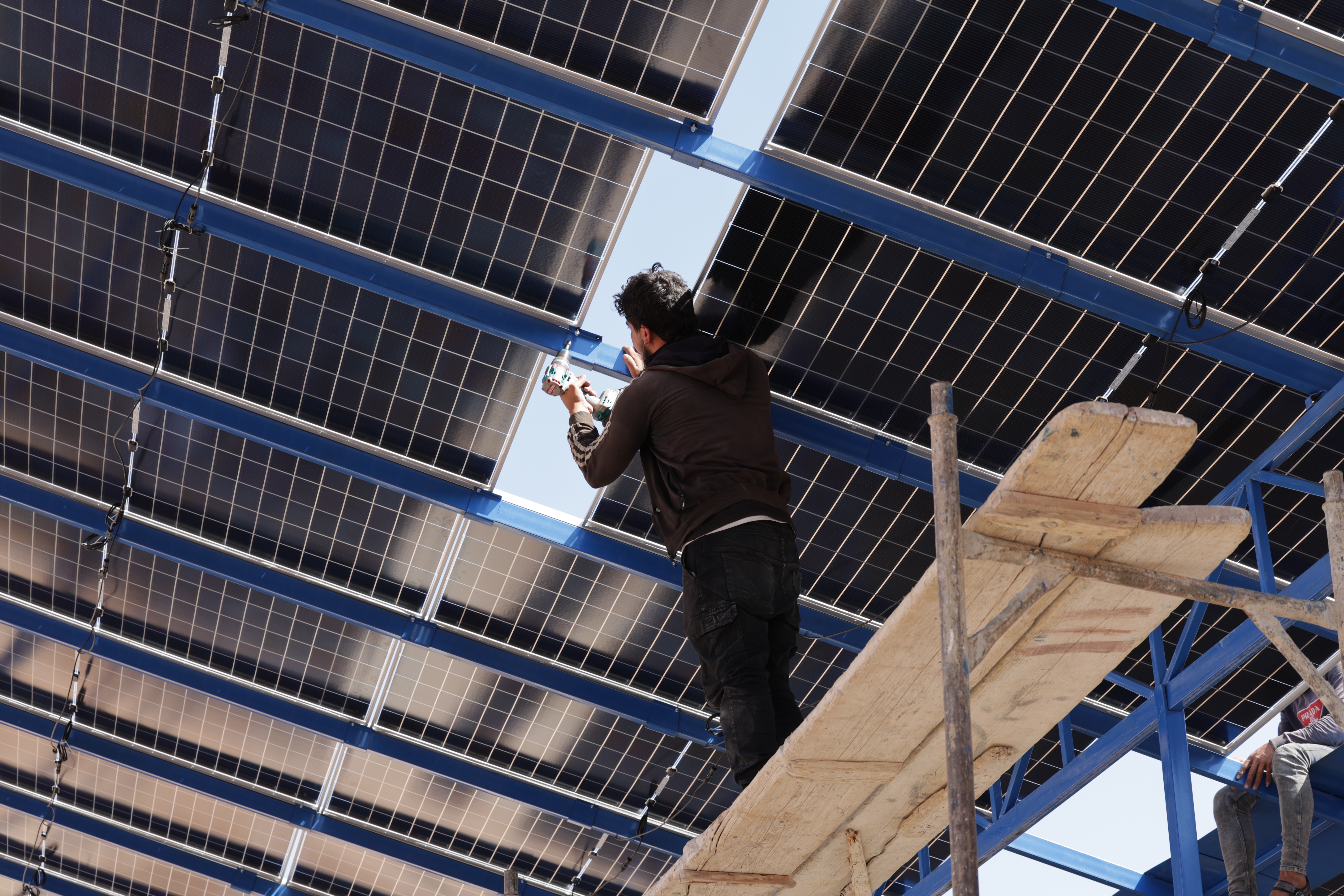
Solar panels being carefully installed on-site, as part of Relief International’s efforts to strengthen reliable and sustainable access to water for the community.
The project directly addressed a combination of challenges: weak water pressure at source, inconsistent grid electricity, and rising household spending on tanker water. According to Naji, an executive council member in the Saida municipality, the impact is visible in everyday life.
“Families were spending money they couldn’t afford on water that should arrive at the tap,” he said. “Now the schedule is more predictable.”
Building local capacity for long-term water security
From the beginning, Relief International prioritized sustainability and local ownership. We worked closely with the municipality and local water authority on system placement, safety, and long-term operation.
Today, the municipality oversees daily operations and system upkeep. Designs, technical schematics, and operating procedures were handed over, and municipal staff were trained in routine checks and preventive maintenance.
“We always plan for what happens after commissioning,” Ahmad explained. “The goal is to prevent the pumps from falling silent again.”
Remaining challenges, lasting gains
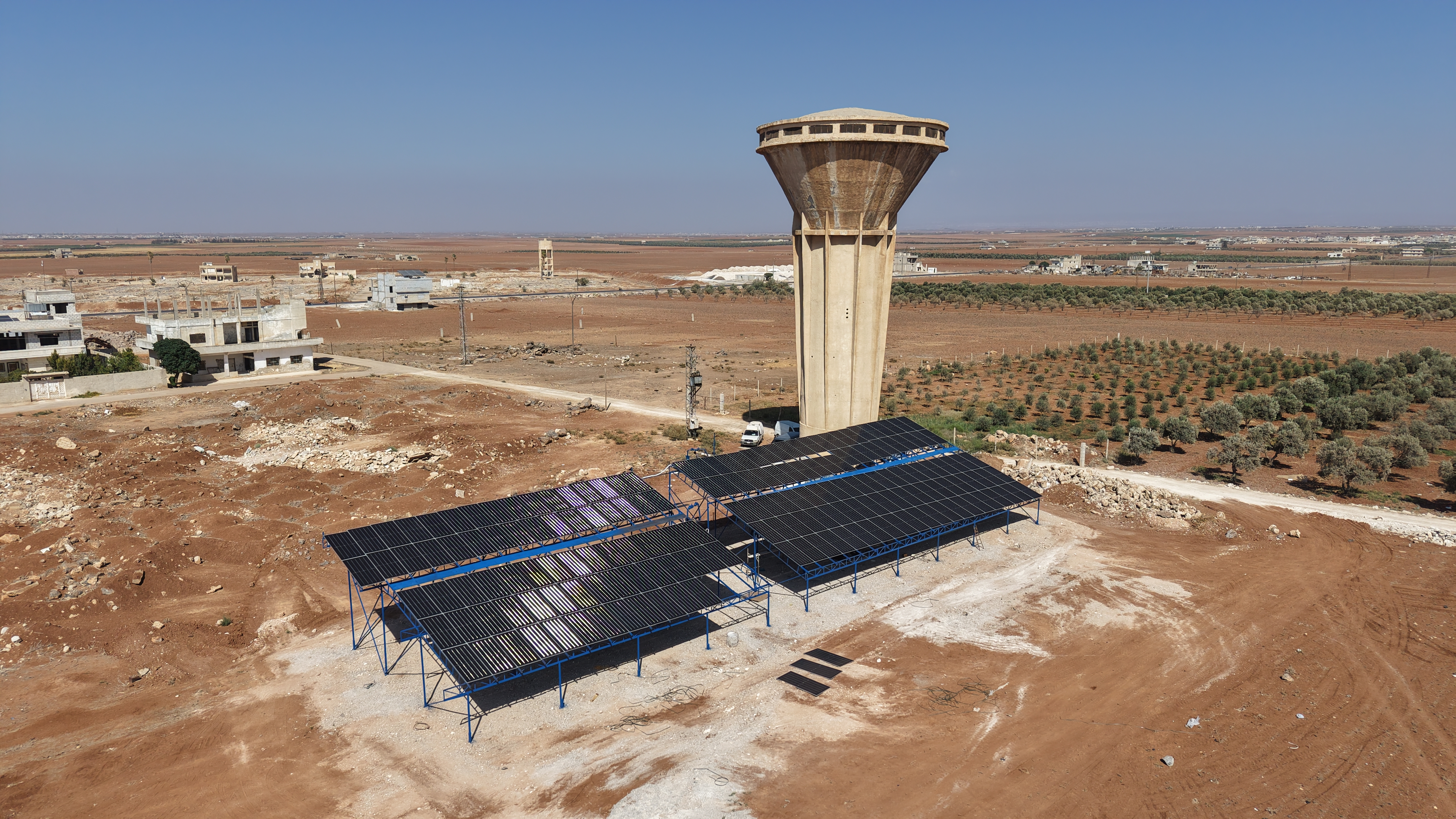
Top view of newly installed solar panels at the site, marking a key step in improving sustainable and reliable water access for the community.
While the solar-powered wells have markedly improved both water frequency and quality, challenges remain. Saida’s aging pipe network still limits water pressure in some areas, and municipal officials note that broader rehabilitation—along with consistent funding for spare parts and technicians—will be needed to reach full coverage.
Even so, the shift has been substantial. With a stable power source, the water department can plan rotations and maintenance around a predictable energy supply.
For households, reduced dependence on tanker water means more money available for food, healthcare, and other essentials, while improved access supports better hygiene practices.
“Water is a basic service. When it arrives on a predictable schedule, families can plan,” Naji said. “We’re committed to running and maintaining the system so the gains hold.”
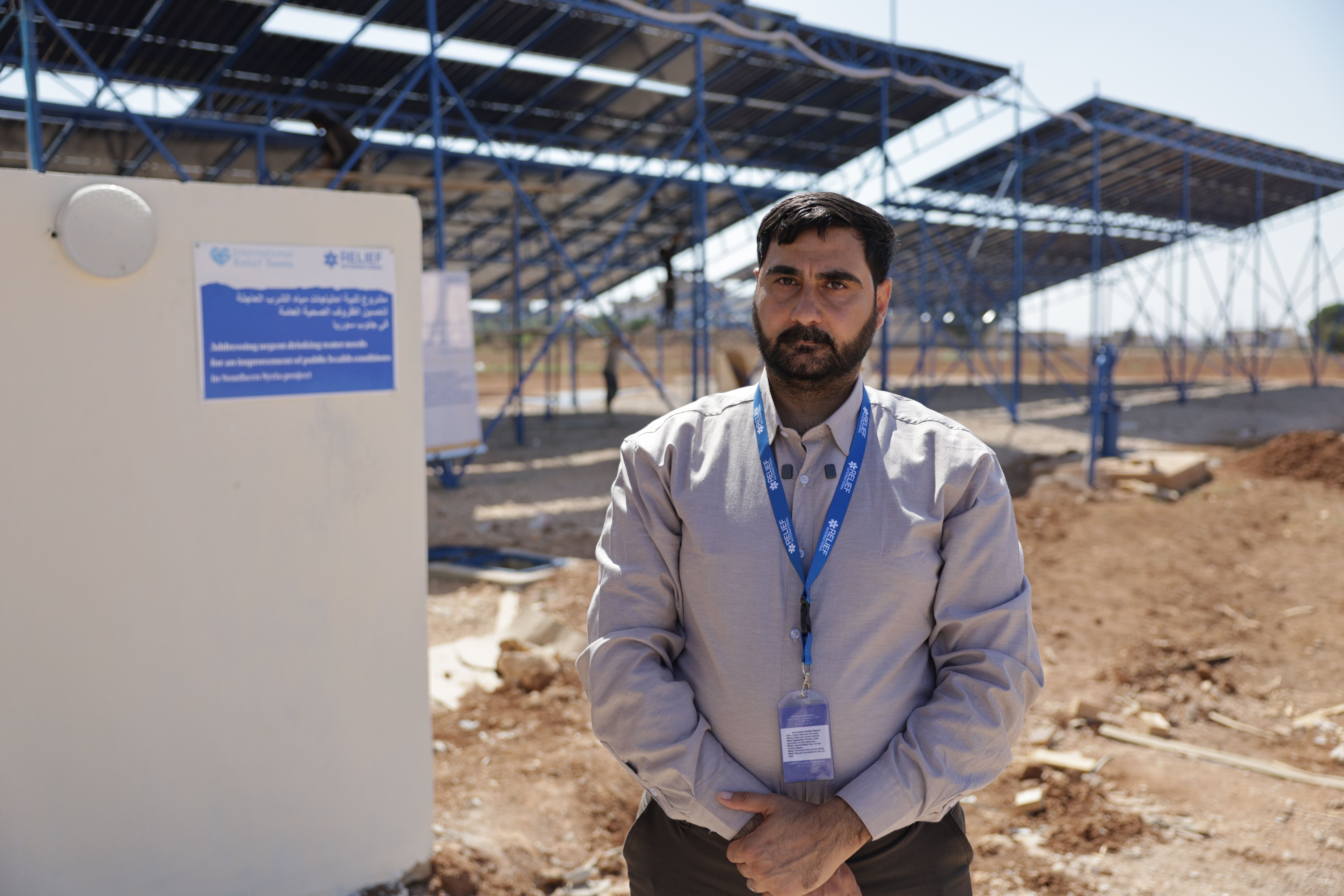
Relief International’s representative on site, overseeing field activities and coordinating implementation.
This project demonstrates how focused, sustainable interventions can restore essential services and improve daily life, even in the most challenging of contexts.