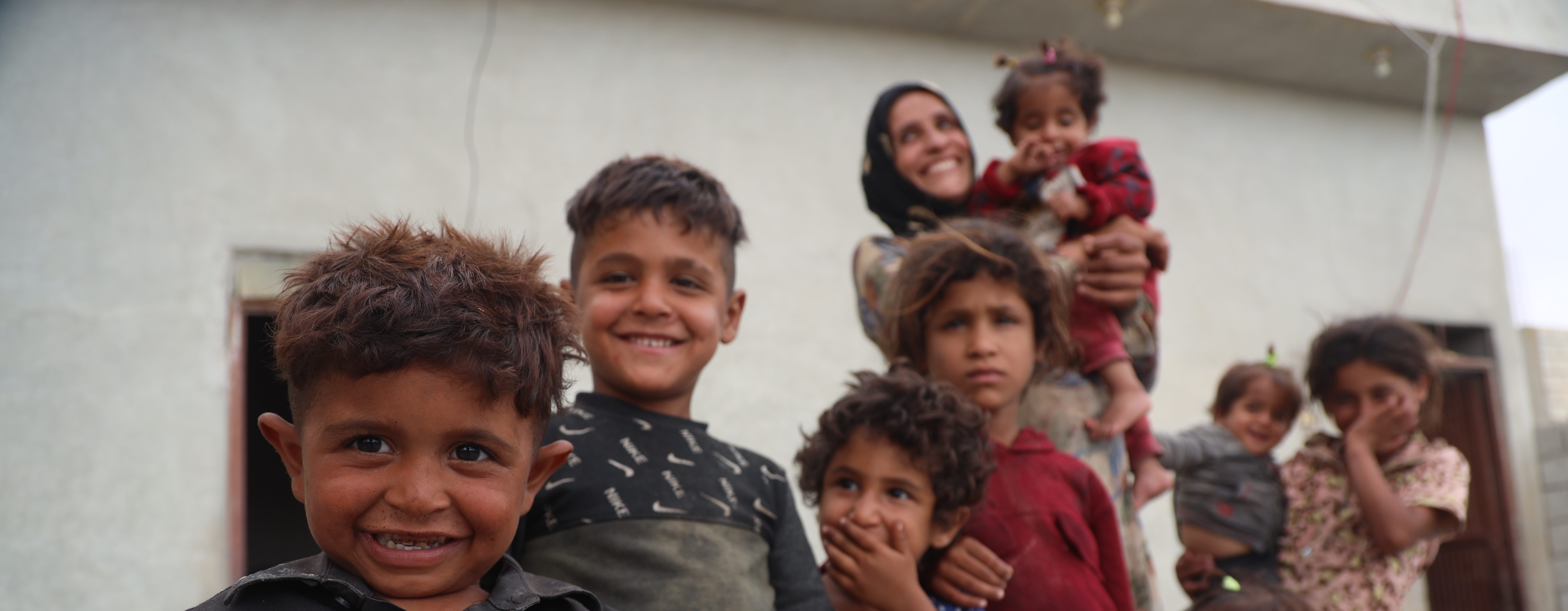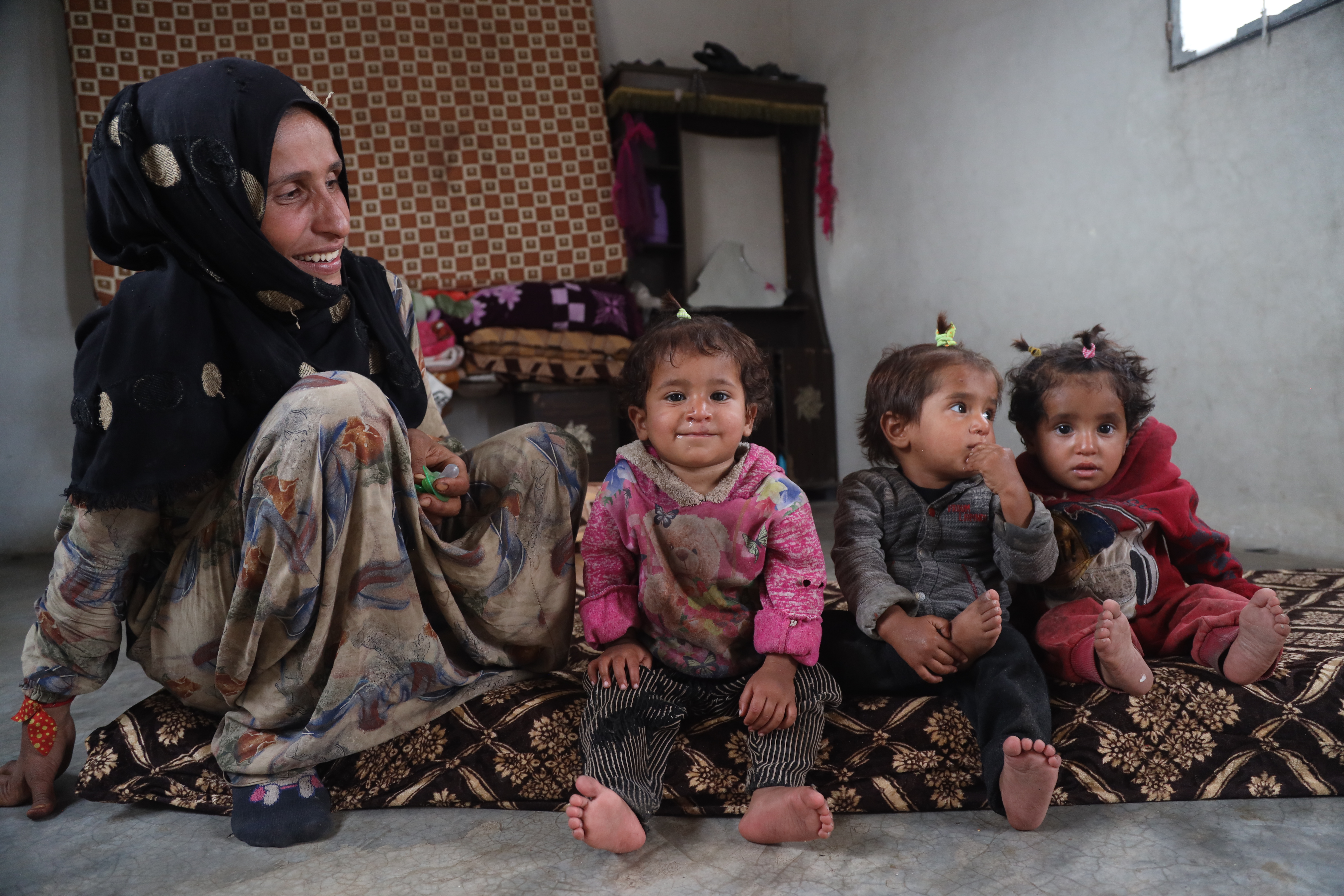
Basma*, 35, is a mother of eight living in western Deir ez-Zor. Last year, when her triplet daughters were around seven months old, she noticed something was wrong. “They had diarrhea and vomiting, were growing weaker, and stopped eating,” she recalls. “I was afraid I might lose them.” With her husband picking up occasional day labor and the family still recovering from years of conflict and storm damage to their home, repeated private clinic visits were out of reach.
A quick referral that saved three little lives
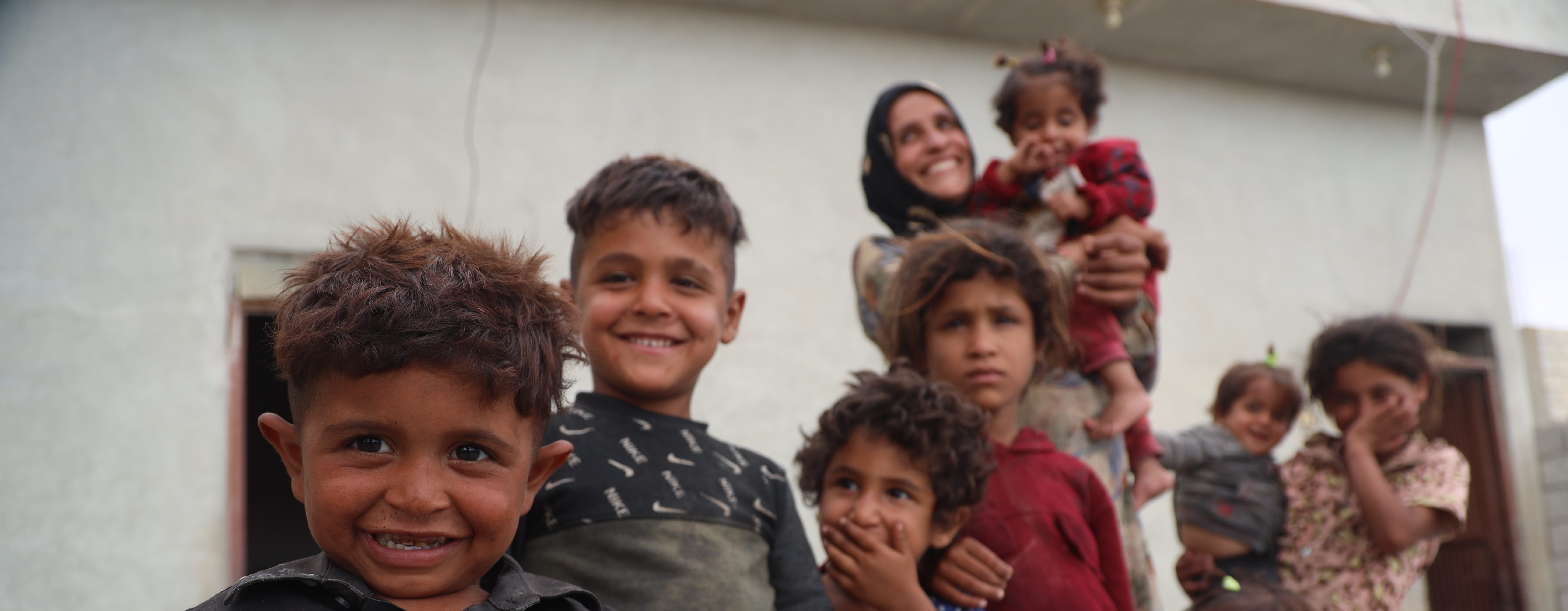
Basma*, with all her children. Photo: Frontline in Focus
At a nearby primary health center run by Relief International at Aljazrah village, a nurse suggested Basma visit the nutrition unit. There, a nutrition technician measured each baby’s Mid-Upper Arm Circumference (MUAC), weight, and length, and calculated their z-scores. All three girls met the clinical criteria for acute malnutrition. Following protocol, the team made an immediate inpatient referral to Raqqa for about two weeks of therapeutic care. “They received specialized milk, close monitoring, and basic supplies,” Basma says. “When we returned home, the center kept following up with us.”
Nutrition guidance that brings families back to health
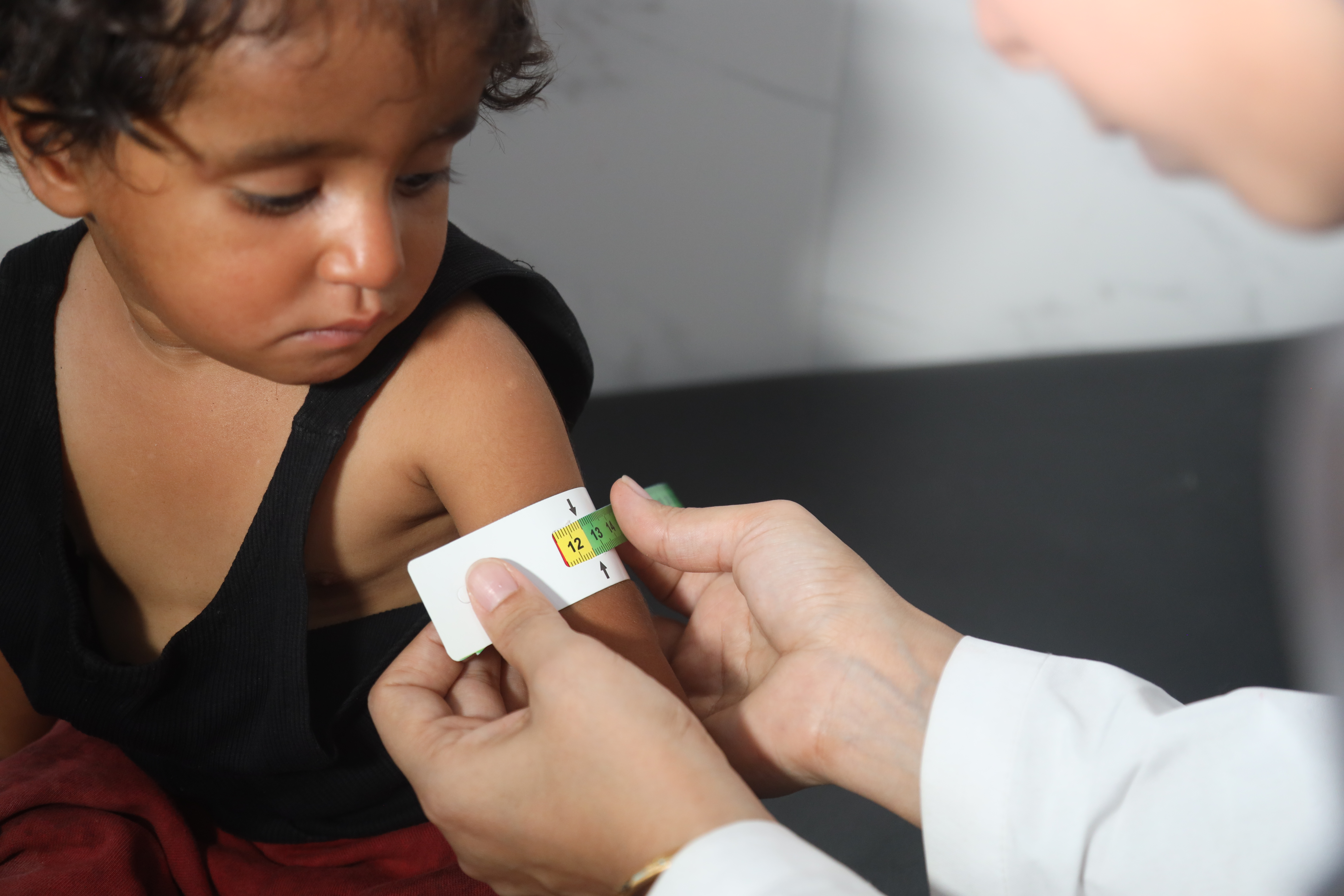
Joumana*, a nutritionist, measures the mid-upper arm circumference (MUAC) of one of Basma’s* triplets. Photo: Frontline in Focus
Back at the clinic, the triplets were enrolled in the community-based management of acute malnutrition program. The staff explained, in simple steps, how to give the ready-to-use therapeutic food Ready-to-Use Therapeutic Food (RUTF): the red-label sachets for severe cases and the orange-label sachets as the girls improved. They also counseled Basma on breastfeeding where possible, safe preparation of family foods, and small, frequent meals to help the girls regain appetite. “Every visit, they took measurements again—MUAC, weight, and length—and checked our progress,” says Joumana*, the nutritionist. “We scheduled regular follow-ups about every two weeks until the indicators stabilized.”
Improved health outcomes through consistent care
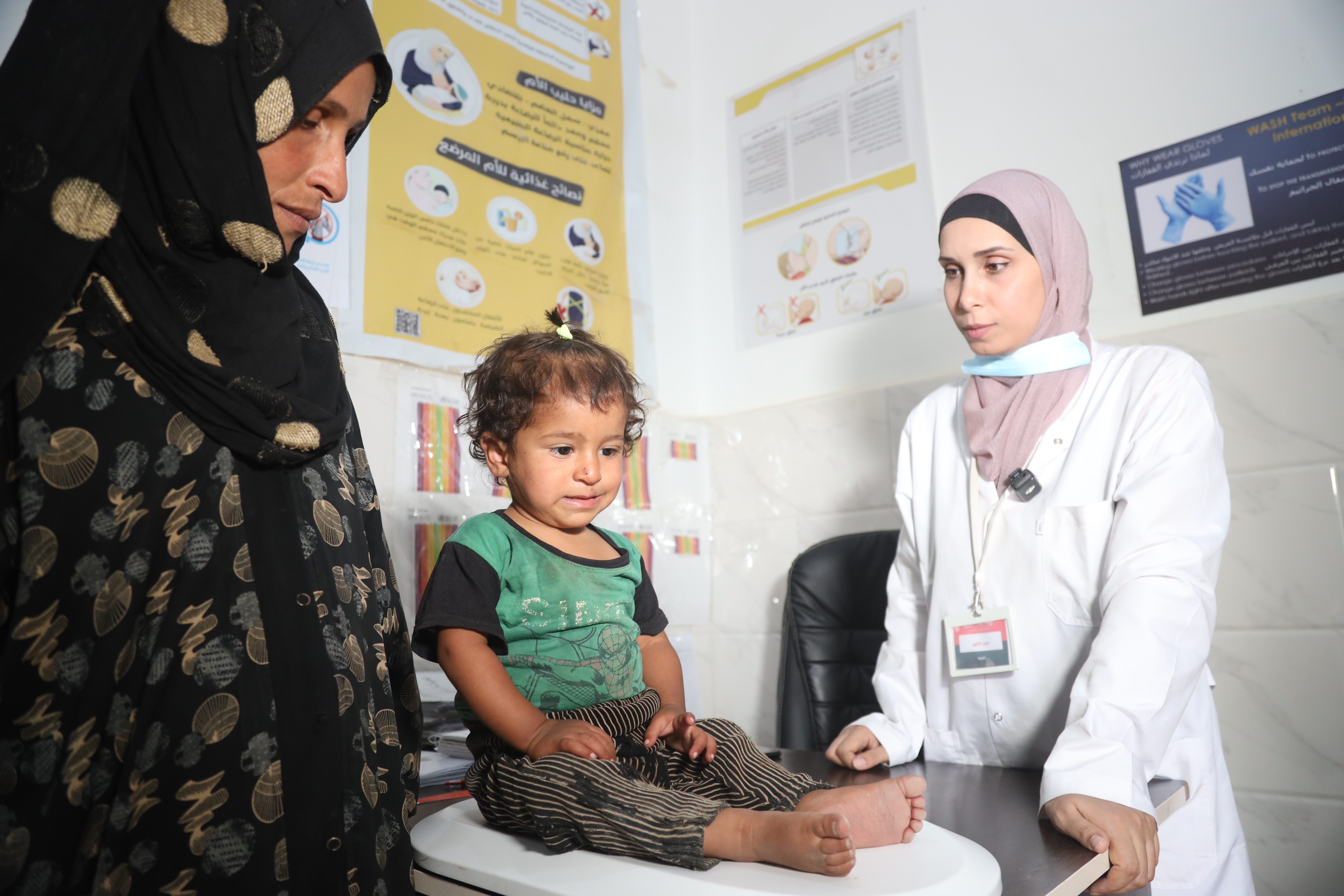
One of Basma’s* Triplet daughters is weighed on a pediatric scale during acute malnutrition follow-up. Funded by the Syria Humanitarian Fund (SHF). Implemented by Relief International. Photo: Frontline in Focus
Progress came in stages. “One daughter improved quickly, one more slowly, and the third is still in the program but doing better,” Hanin explains. At home, Basma saw the difference. “Before, they were too weak to move; now they stand, walk, and ask for food,” she smiles. “When their health improved, I felt like I had my life back.”
Clinic records indicate that since the start of the current project cycle, around 765 children have been reached with nutrition services, along with approximately 255 pregnant and lactating women who received counseling and support.
“Parents tell us they heard about the nutrition unit from neighbors whose children recovered,” Joumana says. “They come, we assess, provide RUTF, and educate caregivers.
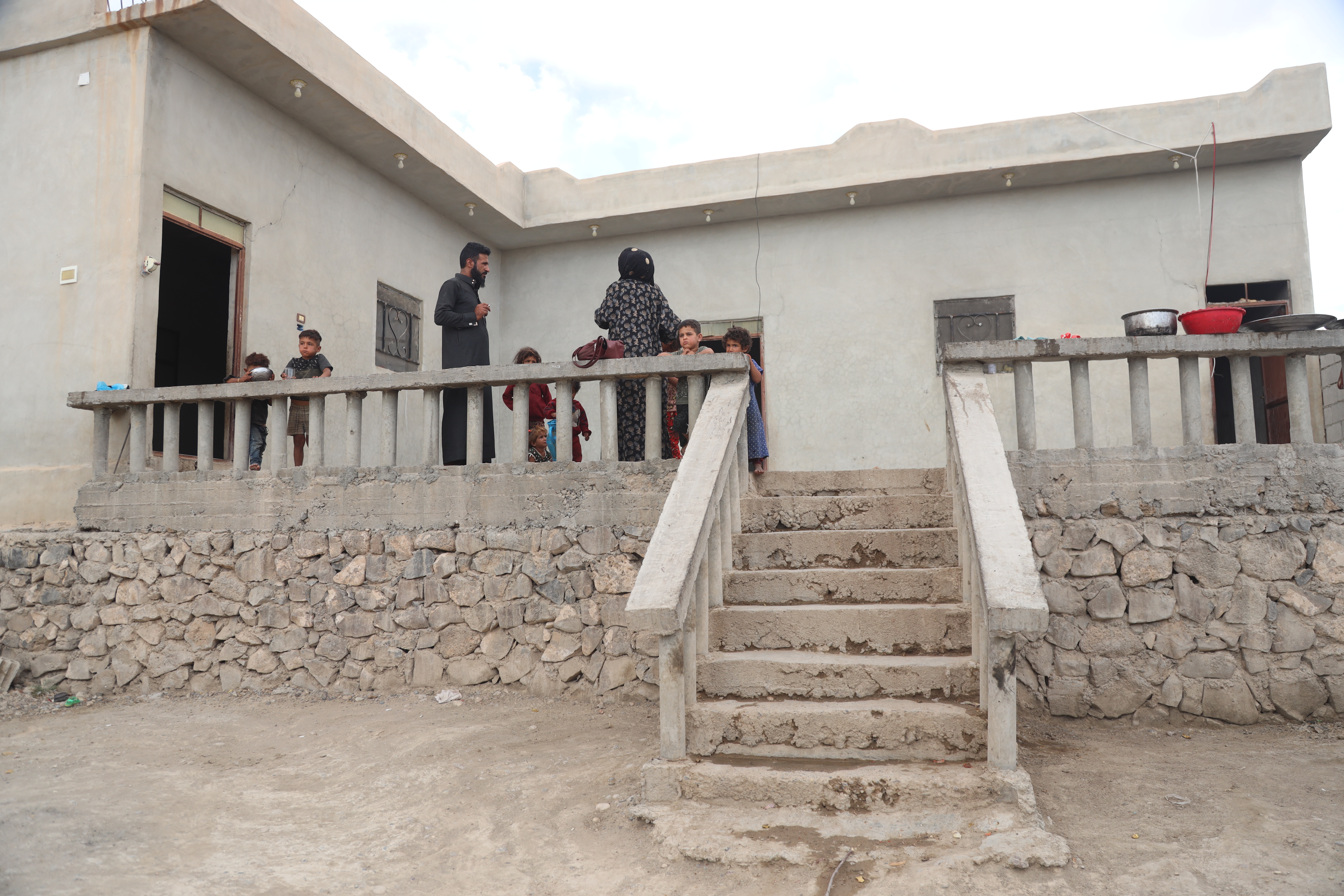
Basma agrees. “Before this health center opened, I was running from pharmacy to pharmacy trying to get treatment for my girls,” she says. “Now, when they need a check-up, I go to the clinic—they welcome us and explain everything.”
While humanitarian aid cannot solve every challenge, sustained support helps families manage preventable conditions and keep children learning and playing. In communities still rebuilding from conflict, continuity of primary health and nutrition services—supplies, trained staff, and regular follow-ups—remains essential.
Funded by the Syria Humanitarian Fund (SHF). Implemented by Relief International.