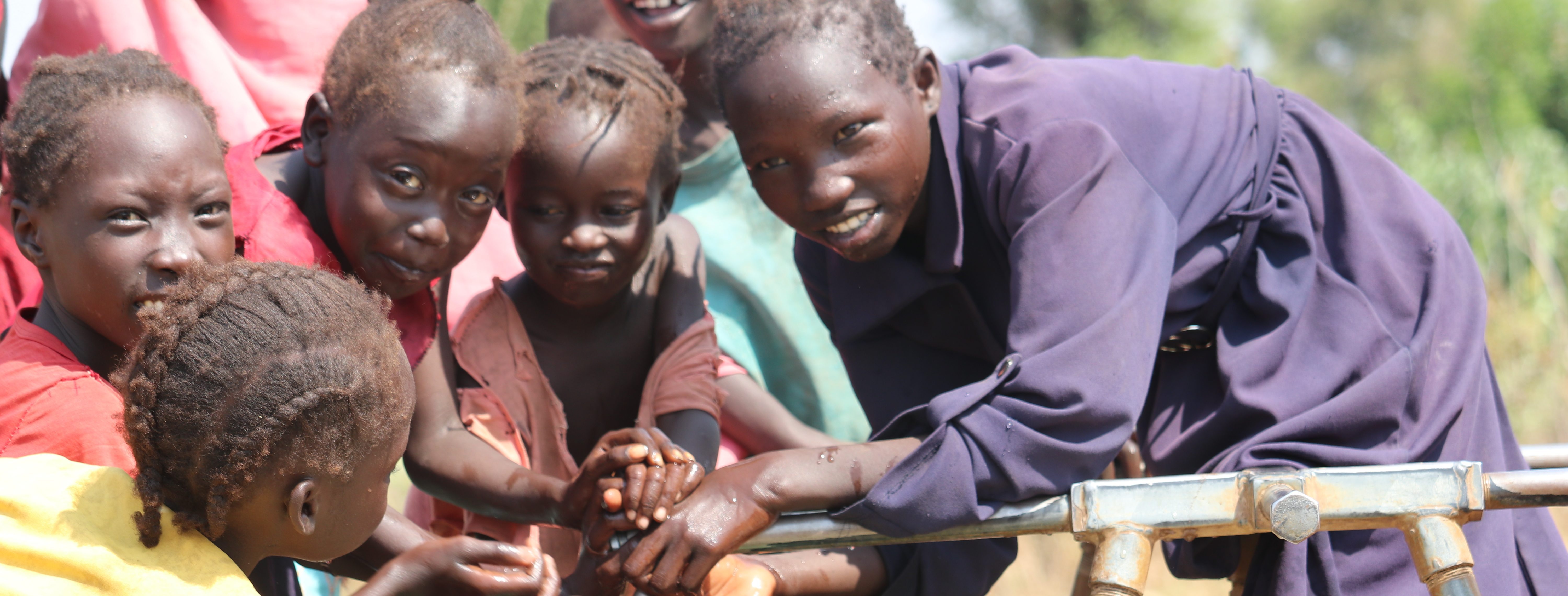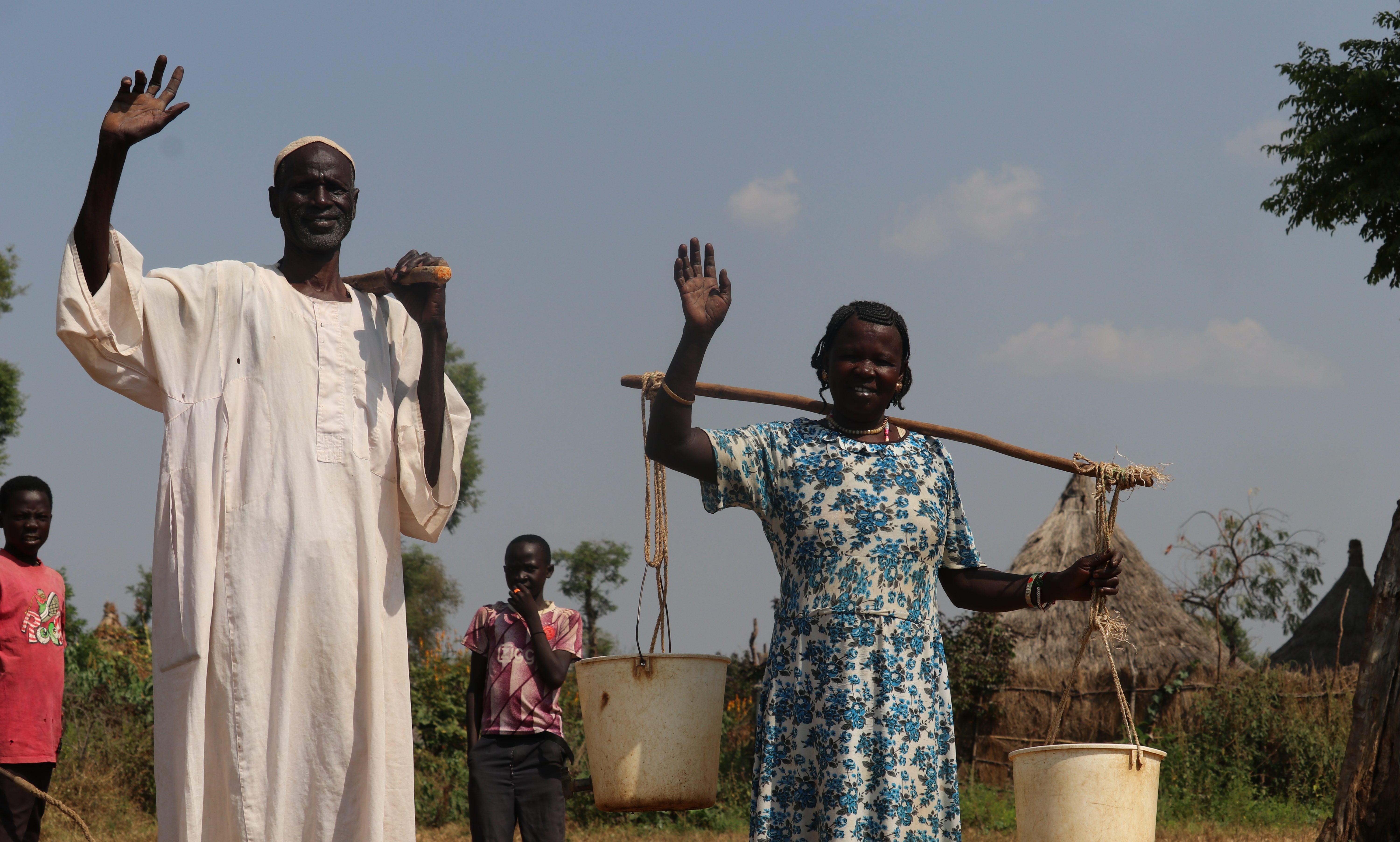
Communities across South Sudan continue to face the combined impacts of conflict, displacement, and climate shocks. Since war erupted in Sudan three years ago, more than 1.2 million refugees and returnees have fled to South Sudan searching for safety. For families living in refugee camps and fragile host communities, access to essentials and sources of sustainable income remain scarce.
Through our approach to clean water and livelihoods support, we are partnering with communities to both meet immediate needs and help rebuild for the future.
Rebuilding livelihoods and businesses after crisis
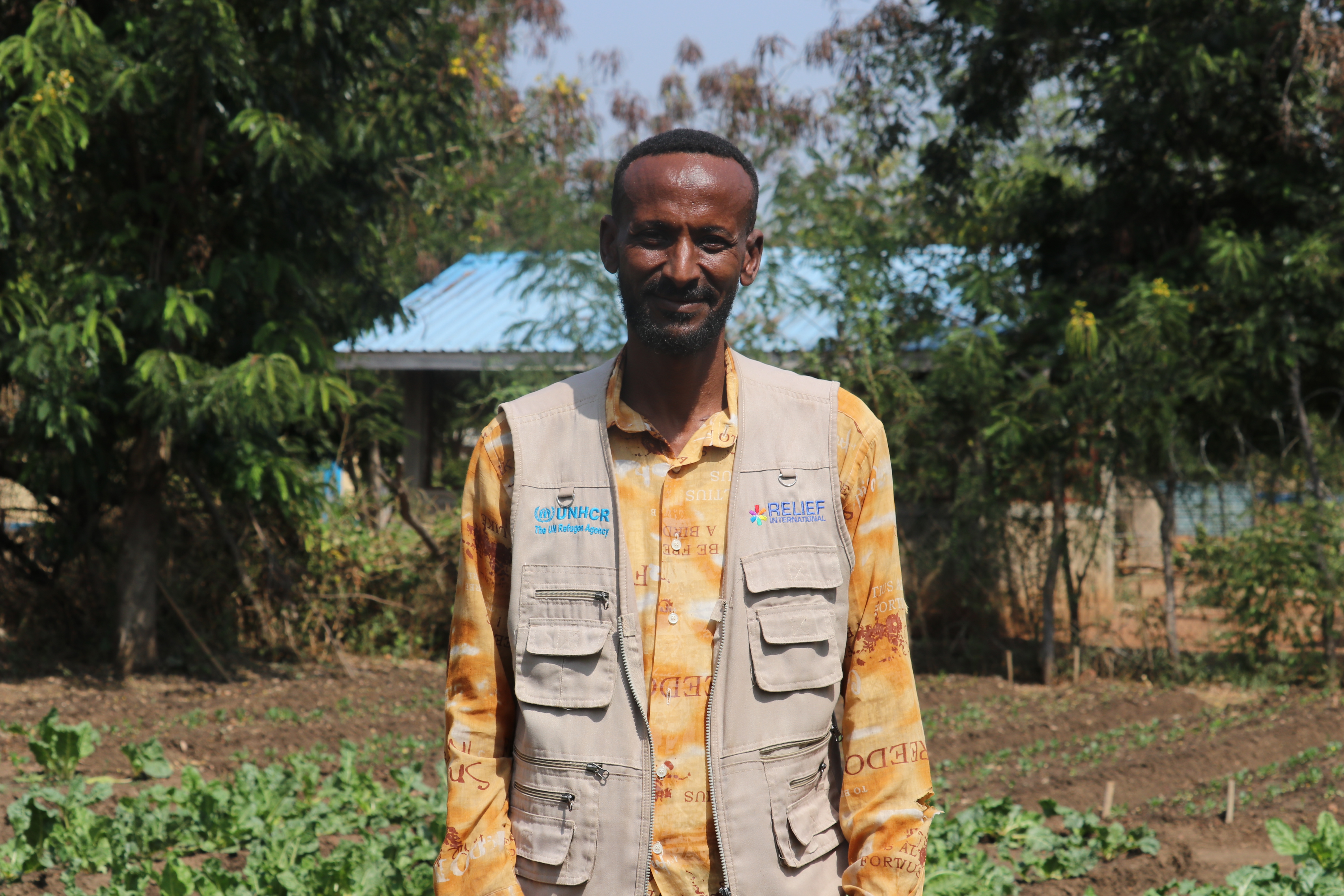
Abdelhadi Ahmed is a Sudanese refugee who took part in Relief International's agricultural training.
Alongside continued insecurity and displacement, repeated flooding has disrupted farming and local markets across Upper Nile State, leaving thousands unable to meet basic food needs. In response, Relief International is supporting refugees, returnees, and internally displaced people to rebuild their capacity to produce food and earn an income.
Almost 700 people took part in our agricultural training last year—covering tillage services, climate-smart farming techniques, and post-harvest handling. In Maban County, we cultivated and distributed more than 32,000 fruit and shade tree seedlings, further supporting communities to restore disrupted farming systems.
For Abdelhadi Ahmed, this support changed the trajectory of his life. Abdelhadi Ahmed enrolled in Relief International’s Technical and Vocational Education and Training (TVET) program in Genrassa Camp in Maban County. Through hands-on training, he learned professional vegetable production and gained connections to seed suppliers and local markets.
“When I arrived in South Sudan as a refugee in 2025, I was starting from zero. Today I am no longer just a refugee; I am a farmer with a future. Now I can buy clothes, soap, and shoes—the essentials I once lacked. My dream is to grow a large-scale farm that can support my whole community,” Abdelhadi Ahmed says.
Sustainable water sources, operated and maintained by the community
In high-density displacement sites, cholera outbreaks remain a constant threat, and limited access to safe water and sanitation infrastructure make communities particularly vulnerable to disease.
Relief International is working to reduce this risk. Last year we provided more than 200,000 people with sustainable access to safe water through community operated and maintained boreholes, water storage facilities, and pipeline systems that deliver treated water daily.
In addition, almost 150 community members took part in Relief International’s training on cholera prevention and response, while 1,500 hygiene kits containing soap, water treatment supplies, and safe storage containers were distributed to households in need.
Mansoor lives in Kaya Camp and acts as a bridge between residents and Relief International’s WASH (water, sanitation, and hygiene) team. He has seen firsthand how reliable water access changes a community.
“When the water flows consistently, our families thrive,” he explains. “But when the supply fluctuates, people from neighbouring areas travel to our taps, and demand becomes very high. Water is not a luxury; it is a human right. Together, we can ensure the taps never run dry.”
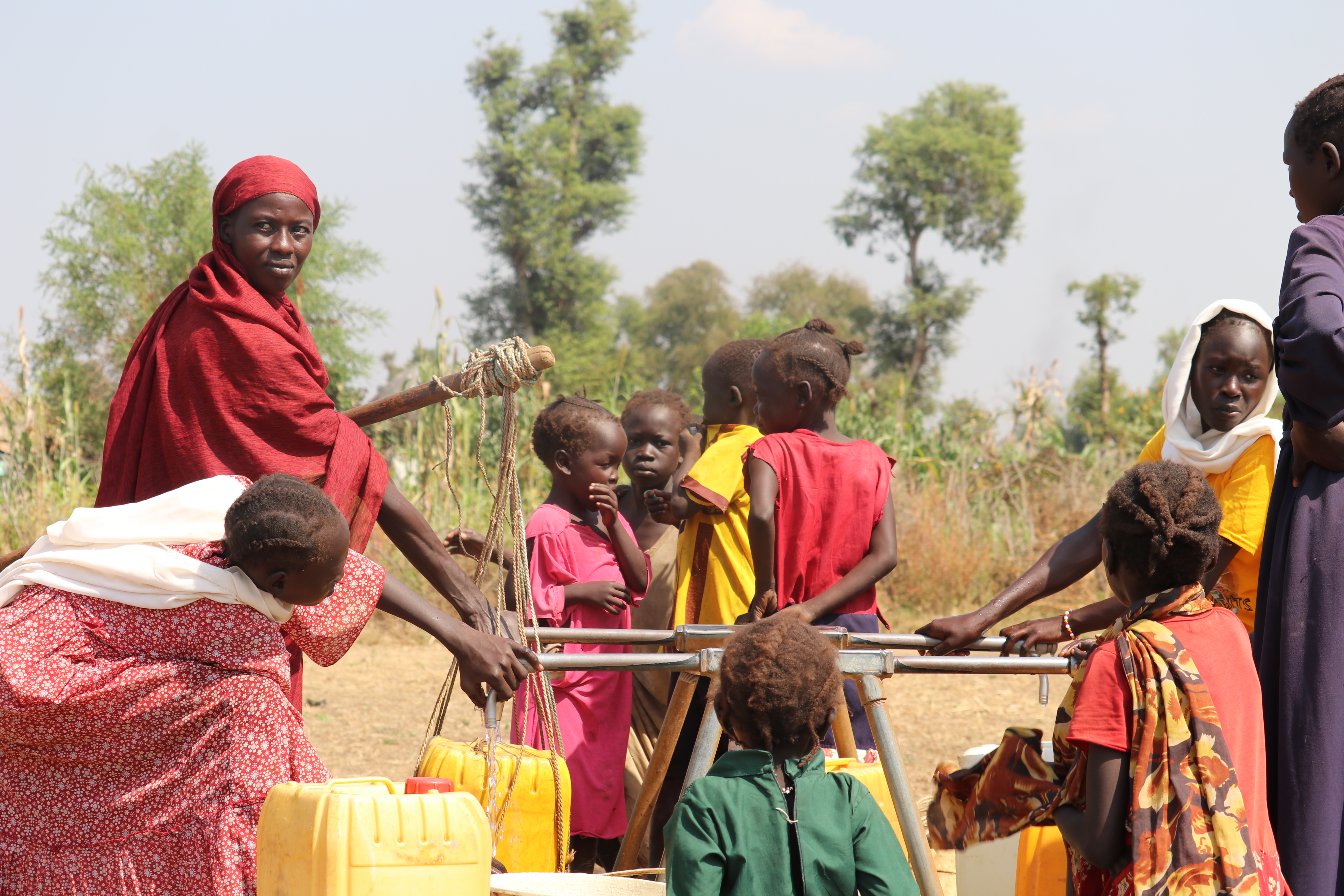
A woman and children collect water from a borehole built by Relief International, and maintained by community members.
Continuing life-saving support despite challenges
Despite growing humanitarian needs and funding reductions, Relief International continued delivering essential services across South Sudan in 2025.
This work has been made possible through the continued support of partners including the United States Government (USG), the United Nations High Commissioner for Refugees (UNHCR), European Civil Protection and Humanitarian Aid Operations (ECHO), the United Nations Children’s Fund (UNICEF), and the World Food Programme (WFP).
As Mansoor and Abdelhadi remind us, this is not just humanitarian assistance, it is a foundation of dignity, stability, and hope for families striving to rebuild their lives.