Mandalay was home for Myat. The 31-year-old works as a Project Manager with a local community organization that partners with Relief International to provide life-saving support in Myanmar.
But nothing in his years of service prepared him for what it felt like to see his hometown shaken to its core.
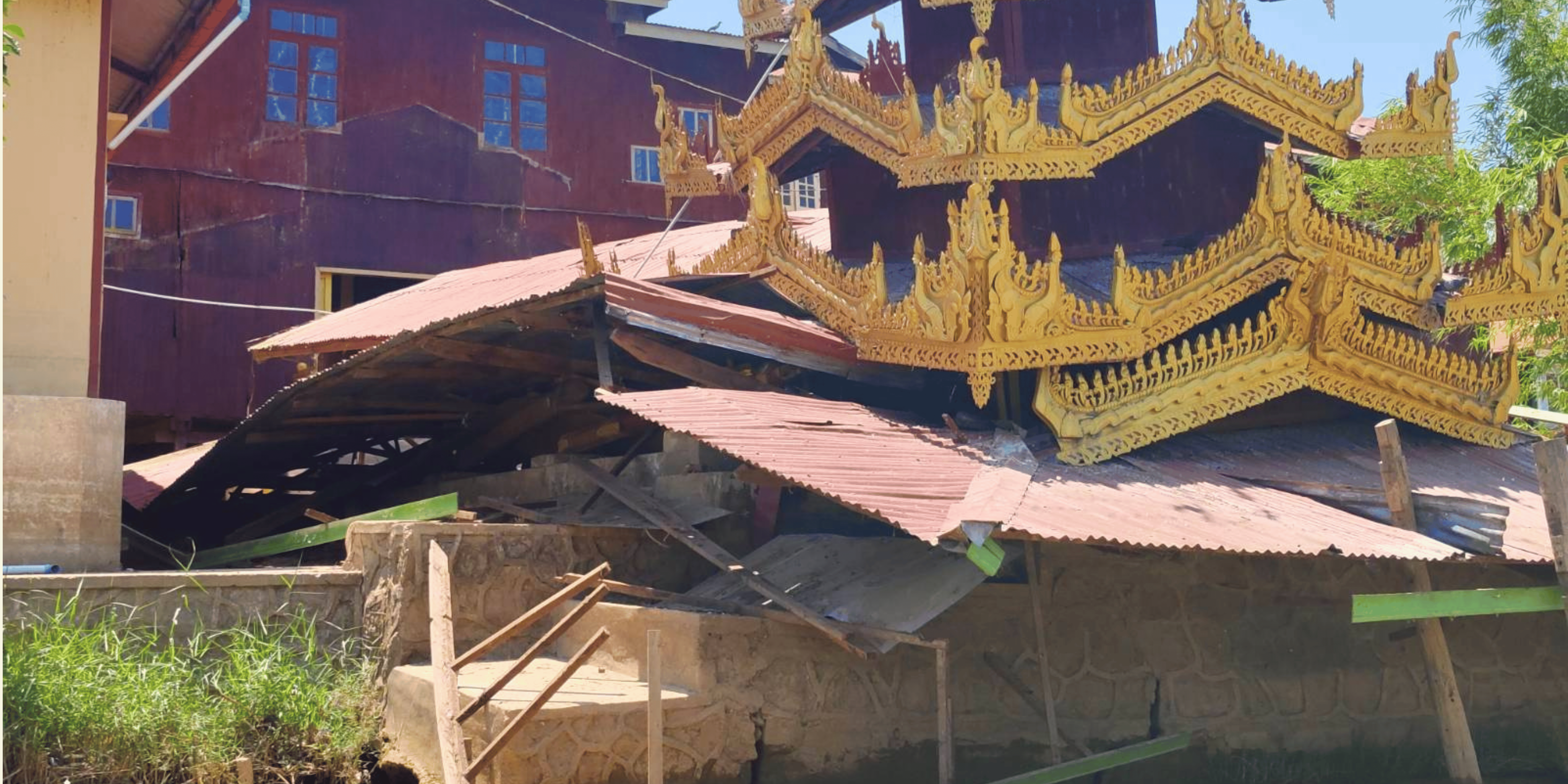
When the powerful 7.7–7.9 earthquake struck on March 28 this year, Amarapura—his township—was among the hardest hit.
“It was heartbreaking,” he says. “To see destruction in my own community, the fear of aftershocks, people losing their homes and lives—it affected me deeply.”
In the immediate aftermath, the needs were urgent and overwhelming. People slept outside in fear, uncertain if their damaged homes would survive the next tremor.
Relief International’s locally-led response
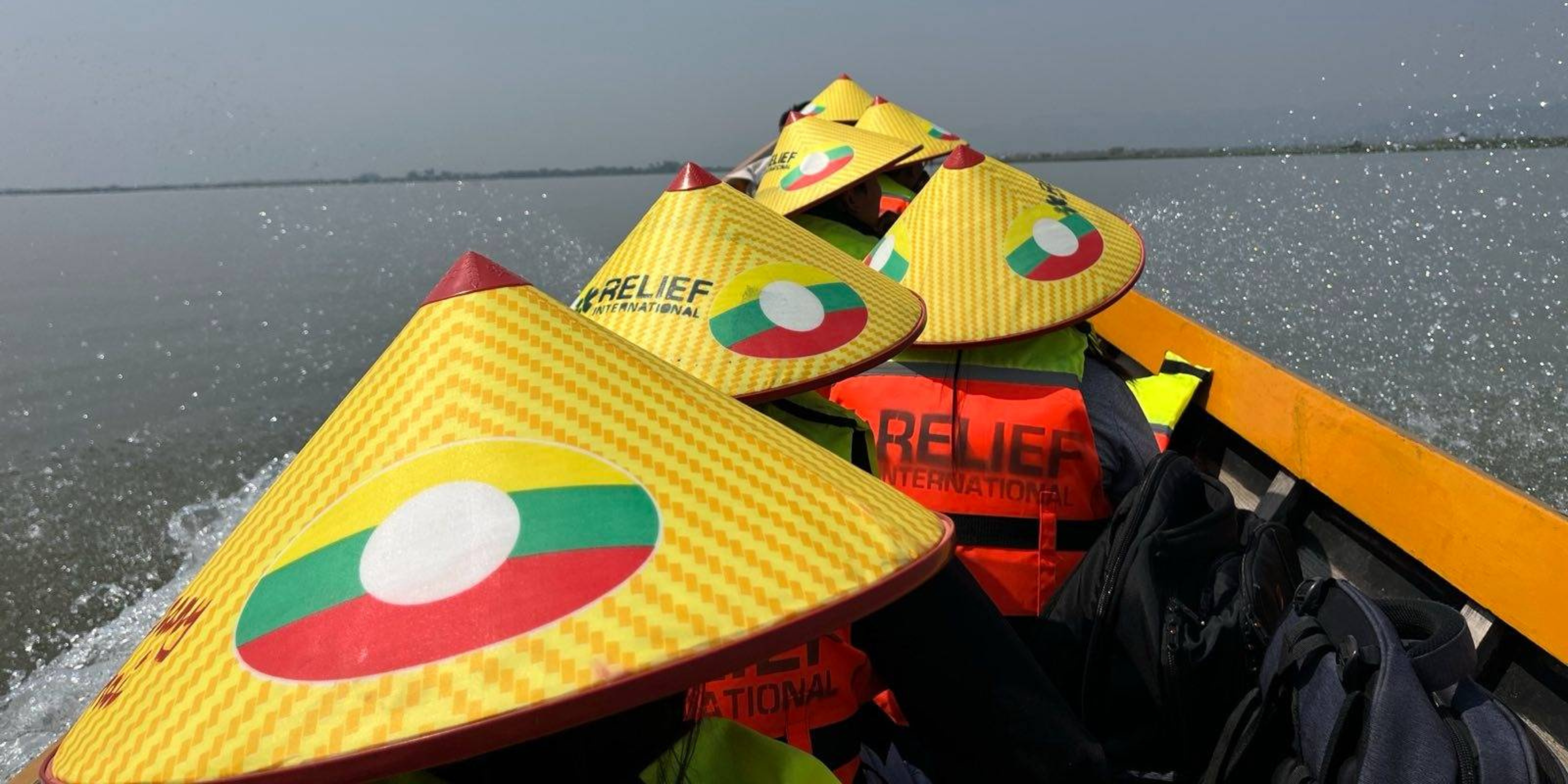
Relief International and its local partners have been working around the clock across affected areas, providing emergency shelter kits, hygiene items, and essential medical care including trauma support.
Health workers are trying to fill the gap left by damaged clinics and overburdened local systems.
Among those responding to the crisis is Sanda, a 31-year-old staff member with Relief International. But on the night of the earthquake, she was not a humanitarian worker—she was a daughter, a sister, and a terrified member of a family facing the unknown.
“It was so frightening for me and my family. I’ve never experienced such a severe earthquake before,” she says. “What really worried us was that the elders in our home were feeling dizzy for several days afterward.”
Despite the fear, Sanda returned to work as part of Relief International’s emergency response.
As a WASH Officer, she plays a key technical role, ensuring that affected communities receive appropriate support in relation to water, sanitation, and hygiene.
Her work involves not only providing essential technical assistance but also ensuring that programs are sustainable—continuing to provide long-term support, even in the most challenging conditions.
She is one of many who are both survivors and responders—those who live through the crisis and still show up to help others find their way through for years to come.
Since the earthquake struck, Relief International has supported almost 30,000 people across the worst affected regions in Myanmar with emergency services spanning health, water, sanitation, nutrition, and protection.
Rainy season poses further risks
Now, the peak of the rainy season threatens to turn temporary shelters where thousands are still living into flood-prone, unsafe spaces.
Myat remembers one man in particular—an elderly resident of Amarapura, who was forced to move to a makeshift shelter on the roadside when his home was damaged beyond repair.
“We provided him with food and some health assistance” Myat says, “but with the rains coming, he remains vulnerable. Unfortunately, this is not an isolated case.”
More support needed
With approximately half a million people severely affected, more support is urgently needed to truly meet the scale of the crisis.
“The challenges are immense,” says Myat. “The needs are far greater than what resources can meet. Prices of essential goods are rising. And many health workers themselves are struggling, both personally and professionally.”
“We need more mobile clinics and trained health workers on the ground,” Myat says. “There is also a real need for mental health counselors—people are carrying invisible wounds. We need resources —human and financial—to reach those in remote or hard-hit areas. We need medicine supplies: Oral Rehydration Solution (ORS), essential tablets, injections, and especially drugs for non-communicable diseases. These aren’t extras — they’re lifelines.”
Still, even with the weight of everything around him, Myat holds onto hope, not just for his community, but for Myanmar as a whole.
“People here are incredibly resilient. But resilience doesn’t mean we don’t need help. What we need now is long-term support. Not just to get through today, but to rebuild tomorrow.”