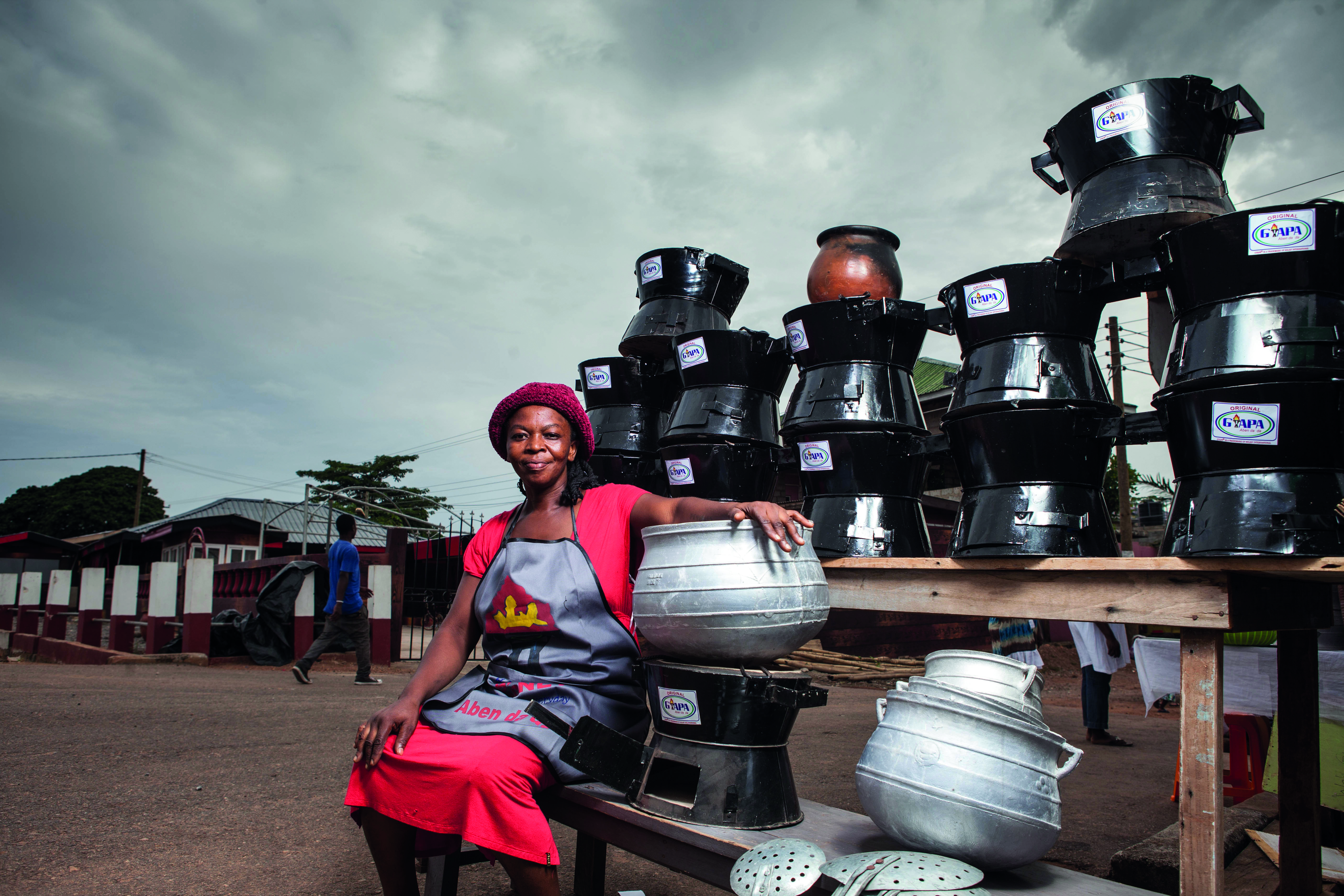
Today the Gyapa™ cookstove project is the largest provider of cookstoves direct to consumers in Ghana, with over 12,000 stoves being produced monthly and over 2.6 million stoves sold in total so far.
Cooking a meal shouldn’t be an activity that risks the lives of a family, yet nearly 3.2 million people annually are victims of harmful smoke exposure from traditional cookstoves or open fires. Ghana is home to 10,000 of these preventable deaths every year.
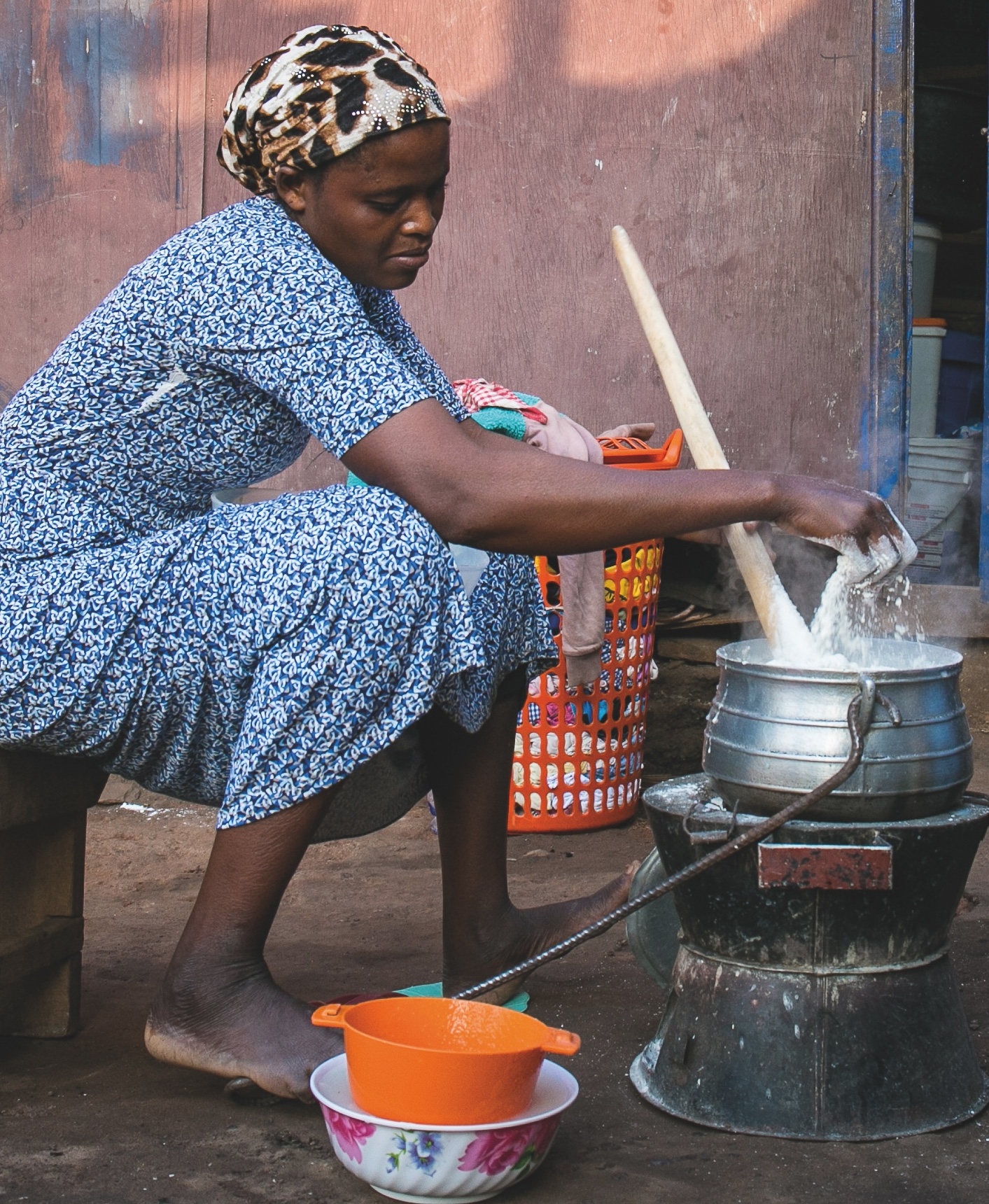
Gyapa™, which means “good fire,” is not only safer, but cooks food more quickly and uses about half the fuel of traditional alternatives, saving families money, reducing deforestation, and cutting carbon emissions enormously. The Gyapa™ is also affordably priced at under $10 and has a payback period for the customer of only about one month, giving tremendous value for low-income families who must purchase wood charcoal.
Creating jobs through local production
More than 50 percent of Ghana’s population of 34.4 million people depends on solid fuels such as wood and charcoal for their household cooking needs. Women and children spend hours each week collecting wood, while urban households must purchase wood charcoal to cook their daily meals, a cost which is significant in the household budget. Demand on forestry resources contributes to deforestation—an environmental challenge that is plaguing the country, which has one of the highest deforestation rates in Africa.
The Gyapa™ was designed for efficient cooking, and its production relies only on materials that are abundant and locally available. It utilizes a durable ceramic liner to harness and store heat during the cooking process, drastically cutting cooking time and saving families up to $150 per year on fuel costs. The stove’s external metal casing is made from recycled roofing scraps, external casings from AC units and refrigerators, and even car doors and hoods.
By keeping production local, Gyapa™ offers a job creation pipeline that’s strengthening economic opportunity in Ghana. Producing the stoves requires highly skilled ceramists and metal artisans that are provided specialized training, then assured stable employment for their skills. The Gyapa stove has created over 700 skilled jobs and counting.
“Through the Gyapa™ stove, we have demonstrated how to promote mass sales of improved cookstoves and the complex organizational requirements needed to achieve success. Our business model is unique – in addition to consumer and environmental benefits, the manufacture and sale of these stoves has created numerous employment opportunities,” said Atsu Titiati, Executive Director, SUDRA (Sustainable Development and Relief Associates.)
SUDRA is Relief International’s local partner which manages the day-to-day operations of Gyapa™ and is in constant contact with the stove stakeholders.
Demand for this improved cooking solution shows no sign of slowing. It’s sold in three different sizes to accommodate household and commercial cooking, and a broad network has come together to deliver the Gyapa™ to consumers across Ghana. Currently, 12,000 stoves are produced monthly by over 200 manufacturers and sold at more than 475 local retailers.
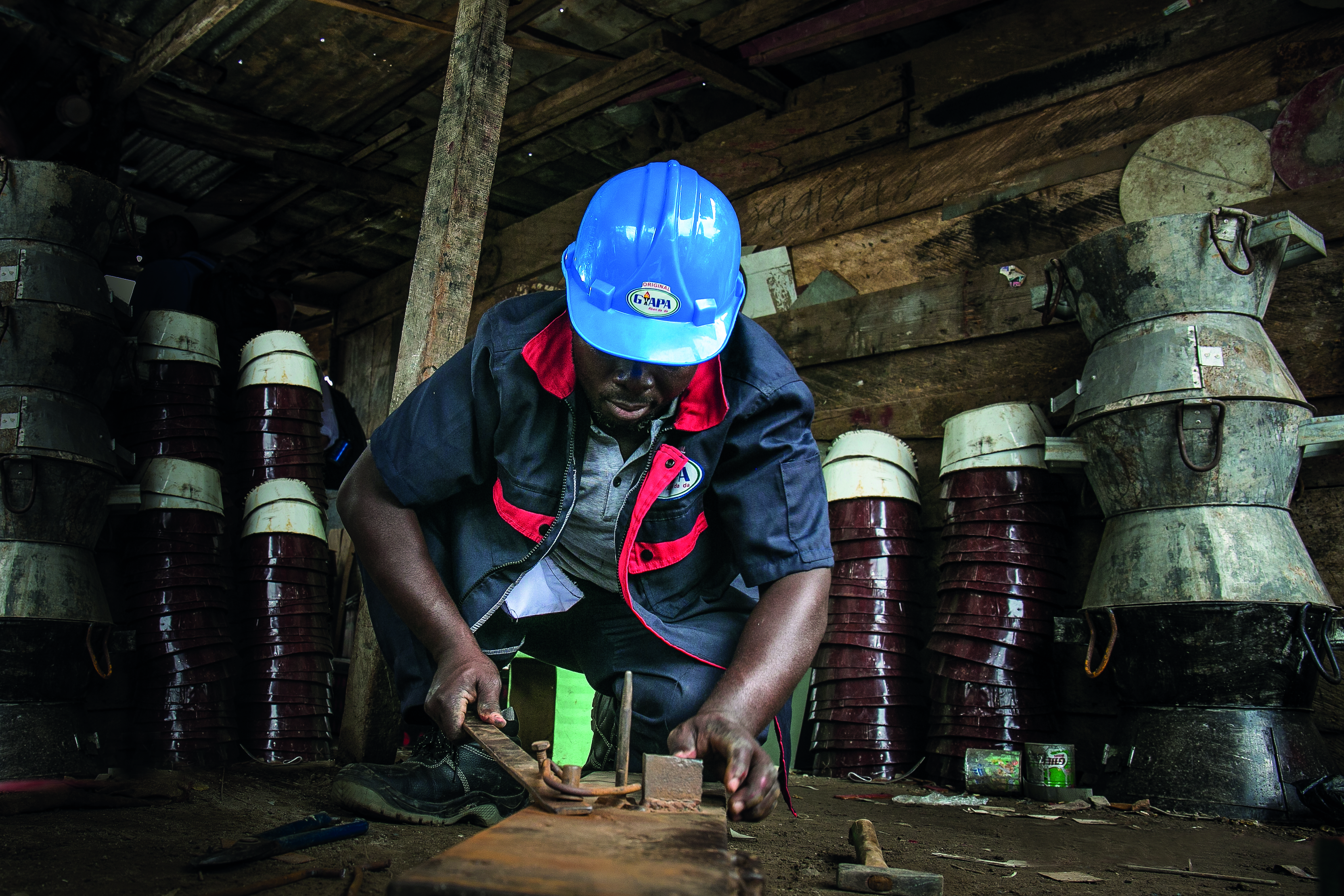
The stove's external metal casing is made from recycled aluminium roofing sheets, external casings from AC units and refrigerators, and even car doors and hoods.
© RI Staff/RI
A thriving, climate-friendly business
The award-winning Gyapa™ cookstove is a time-tested business, Gyapa Enterprises, run by our local community partner, SUDRA. It’s also one of Africa’s leading social enterprises and has become renowned for the stove’s drastic reduction in carbon emissions.
During the Gyapa’s™ 18 years on the market, more than 2.6 million stoves have been sold across Ghana, cutting an estimated 6 million tons of carbon emissions. In addition to being good for the environment, these cut emissions are revenue generators. Gyapa™ Enterprises is a registered carbon finance program under the Gold Standard™ and offsets its costs by selling Gold Standard Carbon Credits to businesses and governments around the world.
The Gyapa™ Project under the Gold Standard has had nine successful verifications with on the ground third party auditors.
“Our project provides an effective means of poverty alleviation and income generation. The reinvestment of the carbon finance funds enables the program to increase scale, expand reach and provide the needed support mechanisms for our network,” said Titiati.
The Gyapa™ stove offers a global model for a market-based approach to sustainable development. It’s a product that was developed in collaboration with end users’ needs in mind, and continues to be produced, distributed and sold by means that boost the local economy and prioritize protecting the environment.
Relief International uses carbon funds to invest in the 100% local Gyapa™ supply chain to expand production, maintain quality control, and perform continuous monitoring to keep the stove accessible for low-income Ghanaian consumers.
For more information, contact Ann Koontz, Senior Advisor at Relief International: [email protected]
Gyapa Project - Short

Gyapa users, producers and distributors share how this economical stove has saved them money, provided steady employment and paid for their kids’ university education.